
What does a prebiotic cream mean? Does it contain bacteria?
Most of us first heard the word prebiotic alongside yoghurt and digestion. In recent years the same word has started appearing on creams and cleansers too. So what does it mean for a cream to be prebiotic? Here is the short version.
What is a prebiotic?
Millions of microorganisms live on the surface of your skin; you can't see them, and they do you no harm. A prebiotic is like food that this natural community can put to good use.
In 2017, the international association of scientists working in this field (ISAPP) clarified the definition and stated that prebiotics can be used not only in things we eat and drink but also in products applied to the skin.
Prebiotic, probiotic, postbiotic: what's the difference?
In short:
- Probiotic: the living microorganism itself.
- Prebiotic: food for the microorganisms that already live on your skin. There is nothing alive inside the cream.
- Postbiotic: substances produced by microorganisms, or parts of them that have been made non-living.
Where did this idea come from?
For many years, the aim in skin care was to reduce the bacteria on the skin. A study in 2007 suggested another route: some plant-based ingredients supported the skin's beneficial residents while pushing the unwanted ones into the background. The researchers called this prebiotic cosmetics.
In the years that followed, similar results were found with other ingredients. A 2022 study showed that this effect carries on inside cream and gel formulas too.
What do studies in people say?
In a 2020 study with 60 people, half of the participants used a prebiotic serum and half used an inactive serum. After 8 weeks, those using the prebiotic serum had more hydrated skin that lost less water and turned red less.
In 2024, 110 people with sensitive skin used a cream containing prebiotics for 28 days; their skin became more hydrated and redness decreased. The same year, in 140 people with very dry skin, a prebiotic care routine reduced dryness in 4 weeks.
Let's be honest
The results are promising, but most studies in this field are small and each was done with different ingredients. So prebiotic care is not a miracle; it is a smart extra added to a good moisturiser.
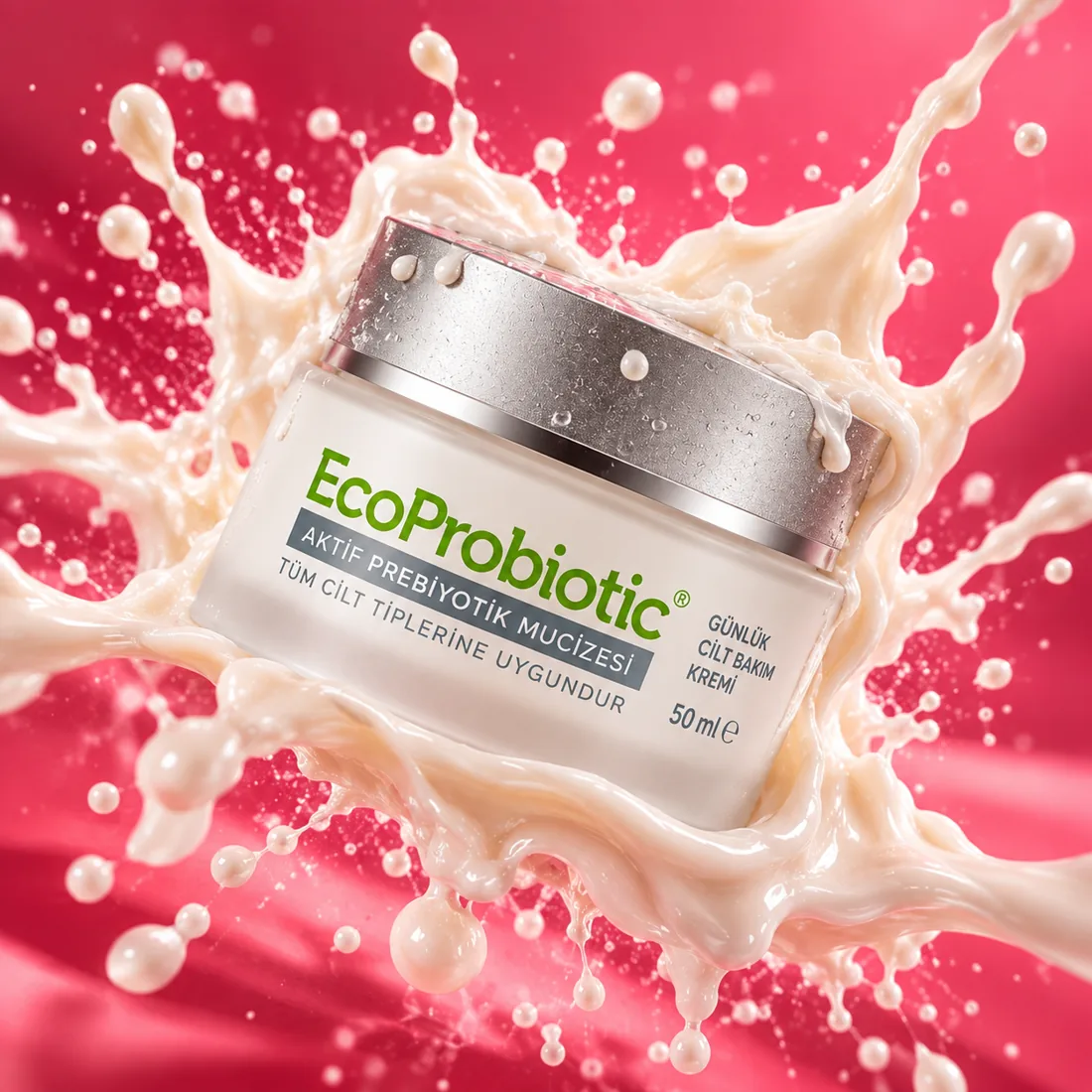
Prebiotic Skin Cream was made with this approach too: it helps repair a worn skin barrier.
Sources
- 1.Gibson GR, Hutkins R, Sanders ME et al. (2017). The International Scientific Association for Probiotics and Prebiotics (ISAPP) consensus statement on the definition and scope of prebiotics. Nature Reviews Gastroenterology & Hepatology 14(8): 491-502. Consensus statement.
- 2.Bockmühl D, Jassoy C, Nieveler S, Scholtyssek R, Wadle A, Waldmann-Laue M (2007). Prebiotic cosmetics: an alternative to antibacterial products. International Journal of Cosmetic Science 29(1): 63-64. Laboratory study.
- 3.Krutmann J (2009). Pre- and probiotics for human skin. Journal of Dermatological Science 54(1): 1-5. Review.
- 4.Al-Ghazzewi FH, Tester RF (2014). Impact of prebiotics and probiotics on skin health. Beneficial Microbes 5(2): 99-107. Review.
- 5.Petrov A, Ćorović M, Milivojević A et al. (2022). Prebiotic effect of galacto-oligosaccharides on the skin microbiota and determination of their diffusion properties. International Journal of Cosmetic Science 44(3): 309-319. Laboratory study.
- 6.Hong KB, Hong YH, Jung EY, Jo K, Suh HJ (2020). Changes in the diversity of human skin microbiota to cosmetic serum containing prebiotics: results from a randomized controlled trial. Journal of Personalized Medicine 10(3): 91. Randomised controlled trial.
- 7.Zhang X, Kerob D, Zhang Z et al. (2024). Efficacy and safety of a cream containing panthenol, prebiotics, and probiotic lysate for improving sensitive skin symptoms. Skin Research and Technology 30(1): e13540. Clinical study.
- 8.Dumbuya H, Podimatis K, Kerob D, Draelos ZD (2024). Efficacy of a prebiotic skincare regimen on improving mild atopic dermatitis and severe xerosis in diverse ethnically patients. Journal of Drugs in Dermatology 23(3, Suppl. 2): s12-s22. Clinical study.
- 9.Taléns-Visconti R, Diez-Sales O, Nácher A (2026). Cosmetic interventions for skin microbiome modulation: current strategies and future directions. Skin Research and Technology 32(4): e70352. Review.
- 10.Woolery-Lloyd H, Andriessen A, Day D et al. (2023). Review of the microbiome in skin aging and the effect of a topical prebiotic containing thermal spring water. Journal of Cosmetic Dermatology 22(1): 96-102. Review.
This article is for general information only. If you have a skin problem that persists or gets worse, see a dermatologist.